Meanwhile, your buyers are deciding in seconds. They skim and scan, but they don't study. Research shows B2B buyers read less than 20% of a page's words. Your content strategy (how you capture attention and communicate value in those few seconds) determines whether they stay or move on.
So how you capture attention in those few seconds determines whether they stay or move on. It's the reason these questions keep coming up:
- Are we over-indexing on keyword density at the expense of readability?
- Are we producing insightful, technical content that nobody ever finds?
- Are we wrapping mediocre messaging in a high-budget redesign that looks great but doesn't generate pipeline?
- How do we strike the right balance when our buyers don't have time for lengthy content?
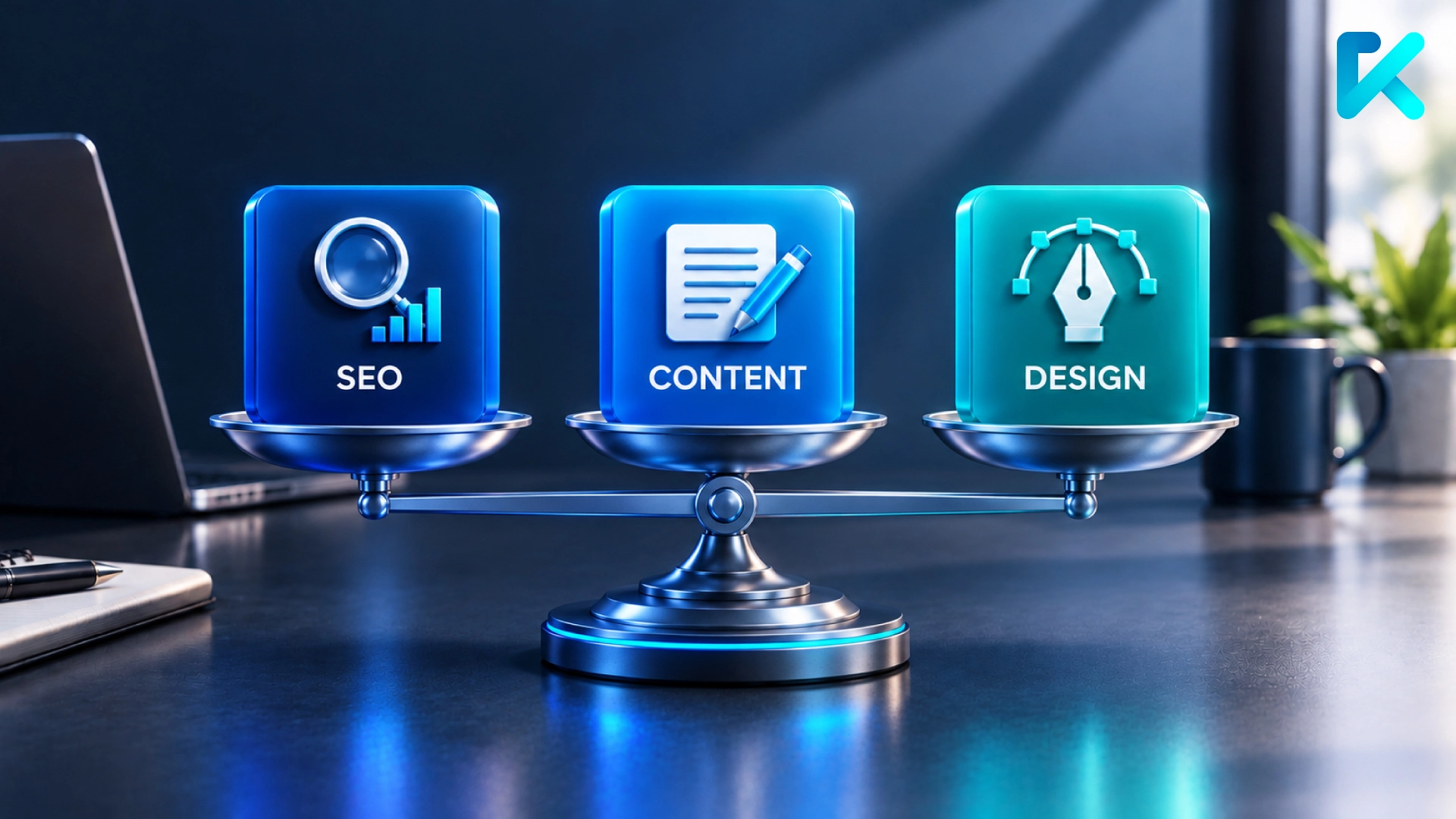
When these three disciplines operate out of sync, your product loses attention in those critical first few seconds. The question that keeps marketing leaders up at night: How much should we actually invest in SEO, content, and design? What's the proportion?
There's no fixed proportion, but there is a way to decide. And it starts with a question most teams skip. Let's unpack what that looks like.
You're Asking the Wrong Question
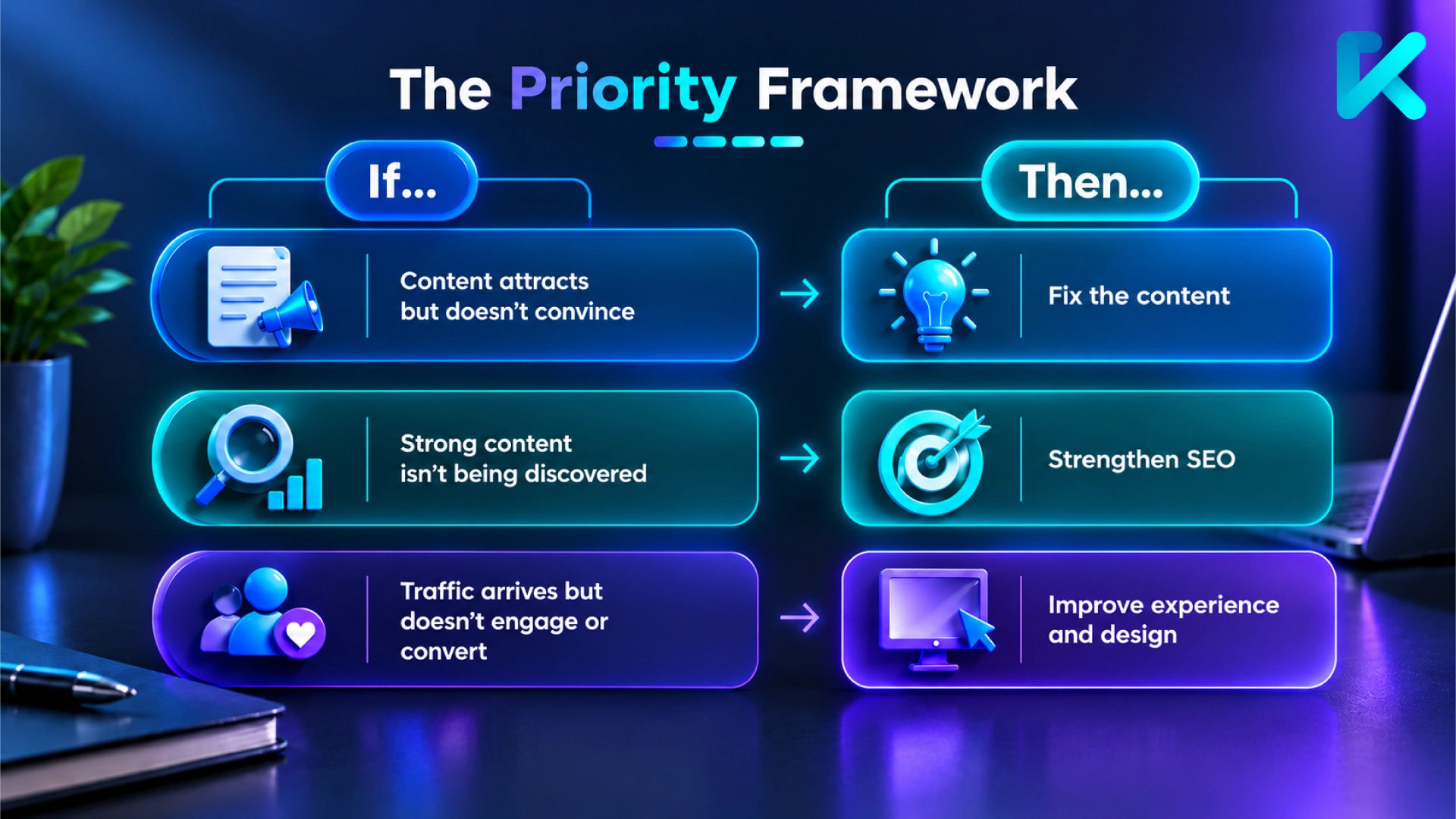
Instead of asking, "What percentage should SEO, content, and design get?" ask: "Which is closest to my growth bottleneck?"
The right mix isn't fixed. It shifts with your business stage. The principle stays constant:
- Design drives conversion
- Content builds trust
- SEO makes both discoverable
Design Isn't a Cost Center
A poor digital experience directly undermines SEO and ROI on content. More than half of customers say they'd switch brands over a poor digital experience. Nearly 3 in 5 want clearer product and service descriptions.
When users can't find information or take action, even strong content and high rankings lose their value. Design that optimizes for conversion, not just aesthetics, is what turns a visit into a decision.
SEO Isn't Just About Rankings Anymore.
SEO is shifting from keyword rankings to AI visibility.
- Generative Engine Optimization (GEO): Helps companies get cited by platforms like ChatGPT, Gemini, and Perplexity. Learn more in our guide on how Kalpins leverages GEO to scale brand presence.
- Answer Engine Optimization (AEO): Targets direct answers and zero-click results. Discover our insights on writing technical content for AEO engines
The shift is already reflected in budgets:
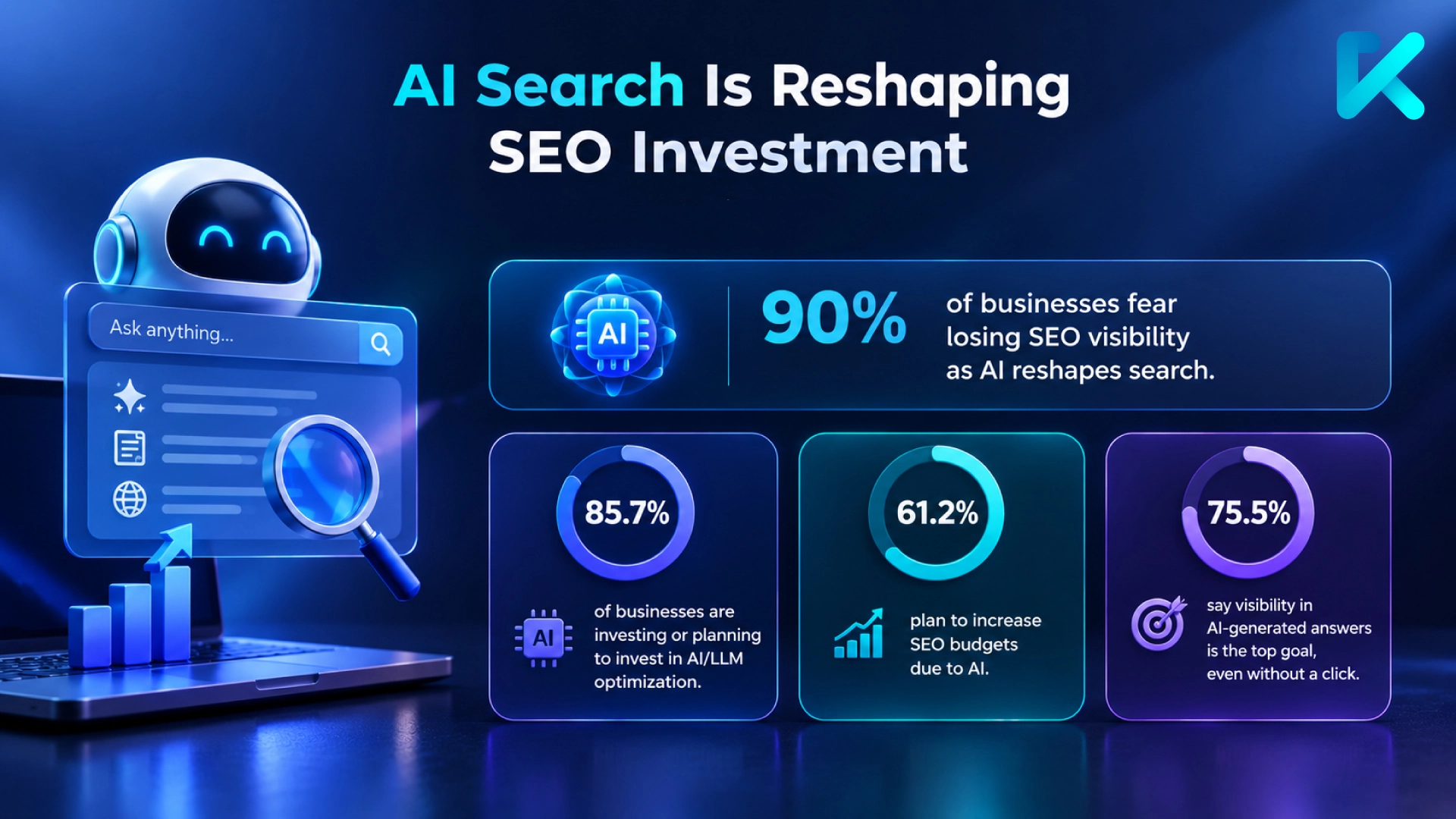
SEO is no longer just about driving website traffic. It's about ensuring your B2B brand shows up wherever customers search for information — even when that search happens inside an AI tool.
Visibility today is more about being cited than ranked.
Why Short-Form Content Wins on Mobile.
The old belief that "longer is better" is fading.
In today's information-heavy digital world, mobile users abandon long-form content 52% more often than desktop users.
The priority is clear: communicate the message with fewer, more impactful words.
Google primarily indexes and ranks your mobile version. Non-mobile-friendly content loses visibility.
Short-form content fits this reality:
- Easy to scan
- Easy to digest
- Easy to consume on the go
Shorter content gets consumed, but short-form isn't about dumbing down. It's about respecting the user's context. Mobile readers are often distracted, scanning for answers, so enterprises must deliver the point in seconds, not paragraphs.
Graphics Carry the Message Further.
Short-form content's real challenge is limited attention. Pure text gets seconds, while visuals increase dwell time and completion.
The Picture Superiority Effect shows visual formats outperform plain text in memory, engagement, and comprehension. People remember more when they see it than when they read it.
Socialinsider's analysis of 1.3 million LinkedIn posts (16,645 company pages) confirms it: multi-image posts average a 6.45% engagement rate.
Pure text forces a trade-off: it's either too short to carry information or too long to read.
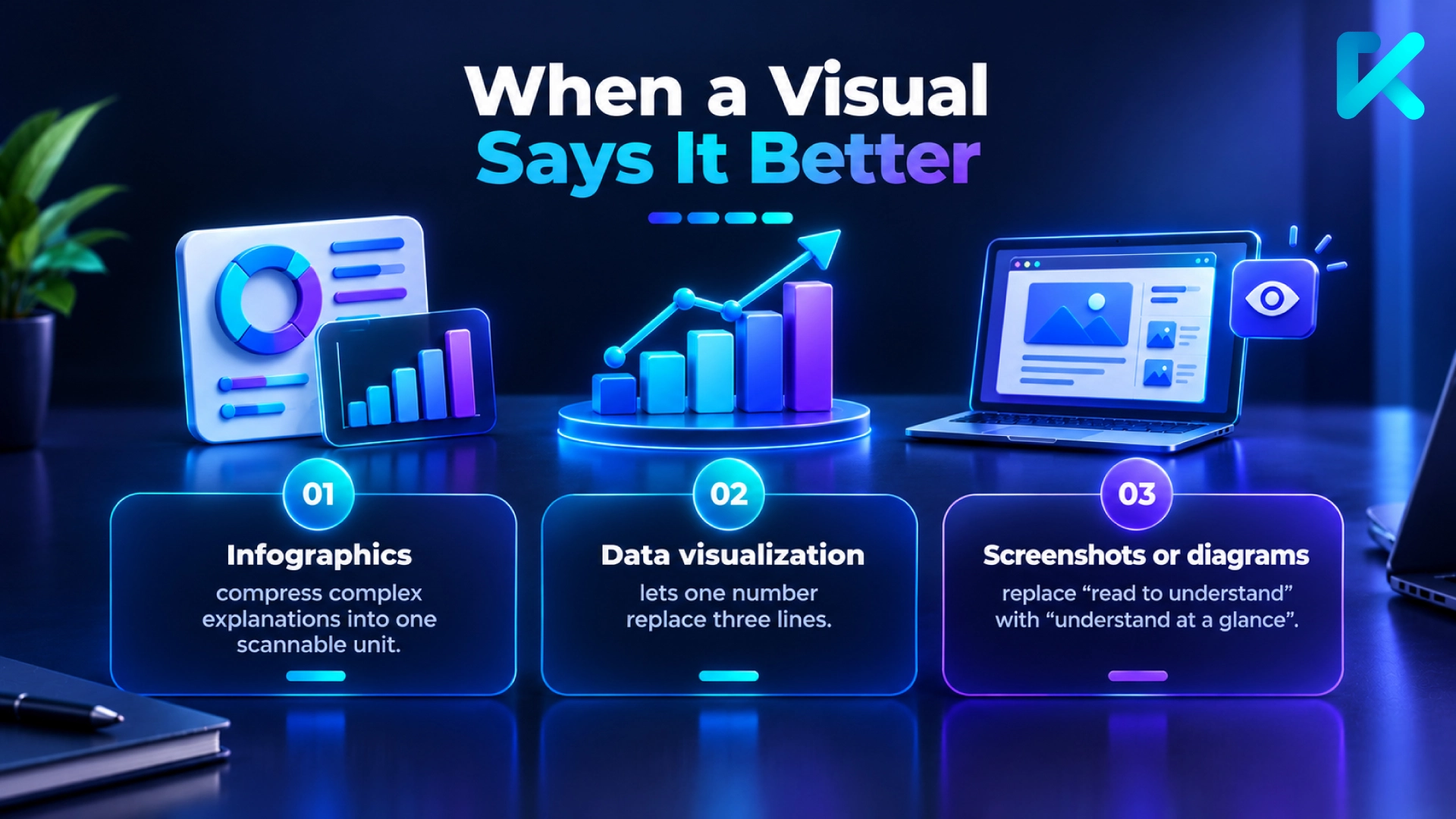
The words still matter. They just don't have to do all the work. And the same holds for your marketing as a whole — the goal isn't to make one discipline carry everything.
So, What Now?
Invest by role, not by channel. Fund the discipline that's holding you back, then manage all three as one system.
Curious where your bottleneck is?
Book a 20-minute strategy call → or just reply with what's slowing you down. We'll tell you what we'd look at first.